
The One Rule Worth Remembering
Only pull the emergency release cord when the door is fully closed and sitting flat on the ground. That's the rule. In that position, the door has nowhere to fall and no spring tension pulling against you, so disconnecting the opener is safe.
The exceptions matter just as much as the rule. Don't pull the cord if the door is open, partially open, or stopped mid-travel — in that position the springs and cables are doing the work of holding up a door that can weigh well over a hundred pounds, and disconnecting the opener removes the one thing keeping it from dropping. Don't pull it if you can see a broken spring, a frayed cable, or a roller hanging off the track. And don't pull it during high wind if the door is currently acting as a wind barrier for the garage opening — in a storm, an unsecured door can be pushed around by wind load, which is exactly the situation South Florida's building requirements for garage doors are meant to prevent.
What the Release Actually Does
The cord, usually red, hangs from a trolley that rides inside a track connected to the opener's drive mechanism. Pulling it disconnects the trolley from the chain, belt, or screw drive, so the door is no longer attached to the opener motor. Once disconnected, the door moves on springs and rollers alone, which is how you're able to lift it by hand. It exists for one practical reason: if the power goes out and you need to get a car in or out of the garage, you shouldn't be stuck waiting for the utility company.
What Goes Wrong When It's Pulled at the Wrong Moment
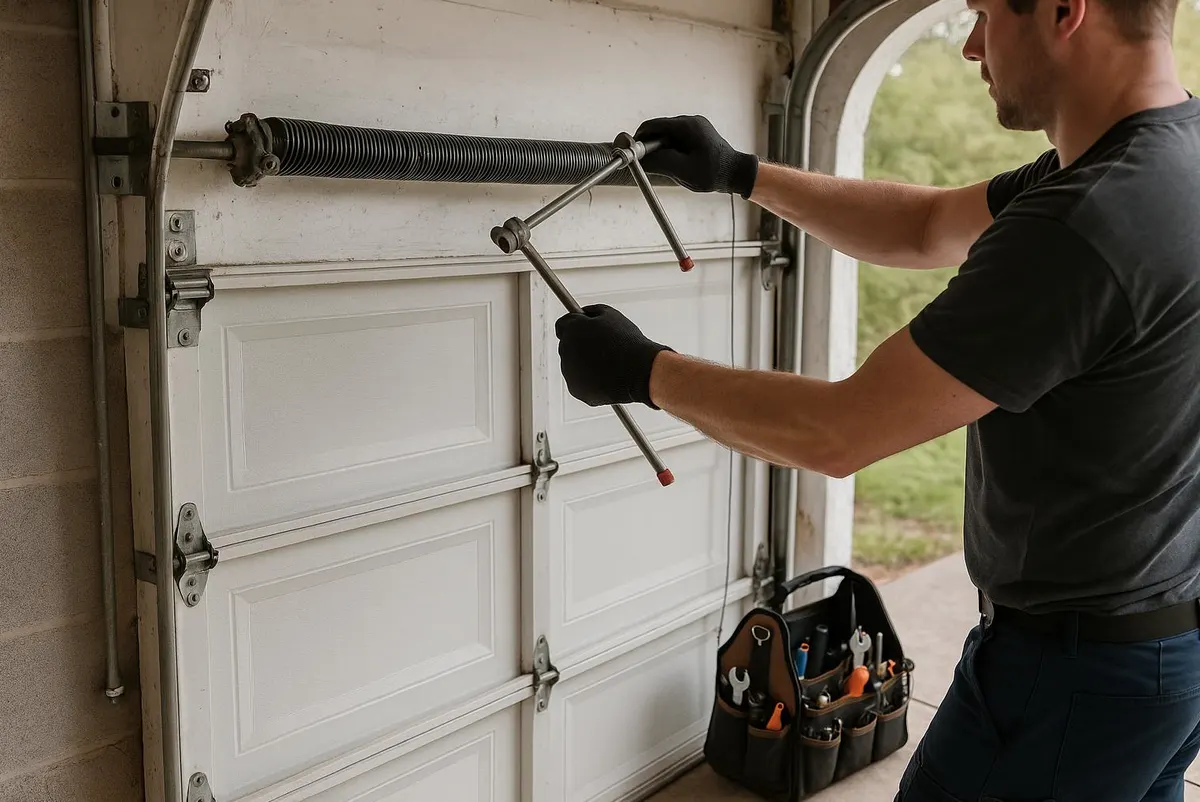
Garage door springs store a large amount of tension, and that tension is what lifts the door's full weight with minimal effort. The opener is only a motor that drives the door along a path the springs already support. When someone pulls the release cord while the door is up or mid-cycle, that support is suddenly gone. The door can free-fall, and depending on spring condition and door weight, it can come down hard enough to bend track, crack a panel, snap a cable, or injure anyone standing underneath or reaching to catch it. This is one of the more common ways people get hurt around garage doors, and it's almost always avoidable with a five-second check beforehand: is the door all the way down?
A second, quieter failure mode shows up with age and humidity. In coastal Broward County, salt air and moisture cause rust on cables, hinges, and the release mechanism itself. A cord that's stiff, a trolley that doesn't slide smoothly, or a cable with visible rust should be treated as a sign the whole system needs attention, not just the cord.
Storm Season Scenarios Worth Planning For
South Florida's storm season brings the situation where this cord matters most: the power drops, the door is closed, and someone needs to get a vehicle out before conditions worsen. That's the textbook safe use — door down, power out, pull the cord, lift the door by hand, then manually guide it back down once you're through. Afternoon downpours and humidity swings can also make a door swell slightly in its tracks, so if the door feels unusually heavy or sticky when lifted manually, stop and inspect rather than forcing it. A door that's hard to lift by hand with the opener disconnected usually means spring tension has dropped or the track has shifted, not that you need to pull harder.
Reconnecting the Door Correctly
After manual use, reconnect the trolley to the opener by pulling the cord again or using the release lever in the opposite direction, then run the opener through one full cycle to confirm the carriage has re-engaged. A door that closes by remote but doesn't fully seat, or that reverses unexpectedly, often means the trolley didn't lock back in. Don't leave the door disconnected overnight, especially ahead of forecasted wind, since a door running on springs alone without the opener's locking mechanism offers less resistance to being pushed.
Quick Checklist Before You Pull the Cord
- Door is fully closed and resting on the floor
- No visible broken spring, frayed cable, or off-track roller
- Not during active high wind if the door is closed and acting as a barrier
- You have a plan to manually close and reconnect once you're through
When to Call Precision Garage Door of Pompano Beach
If the release cord feels stuck, if the door drops faster than it should when disconnected, or if you've already had a hard-close incident from pulling it at the wrong time, that's a job for a technician rather than trial and error. Precision Garage Door of Pompano Beach handles Garage Door Spring Repair for doors that feel heavy or fall quickly once disconnected, and Garage Door Maintenance & Tune-Up visits that check cables, rollers, and the release mechanism itself for the rust and wear that coastal humidity causes over time. If you're relying on manual operation often because of storm-season power outages, ask about opener models with battery backup during a Garage Door Opener Installation — it removes the need to use the release cord at all during most outages.
If your garage door in Pompano Beach, Fort Lauderdale, Deerfield Beach, or anywhere nearby isn't behaving the way it should when you disconnect or reconnect the opener, call Precision Garage Door of Pompano Beach for a straightforward inspection before the next storm rolls through.